



LOPO Material and Culture
Huandong Yunqi does not rebuild a traditional courtyard house. It remembers one through color, material contrast and the measured pause between a gateway and a garden.
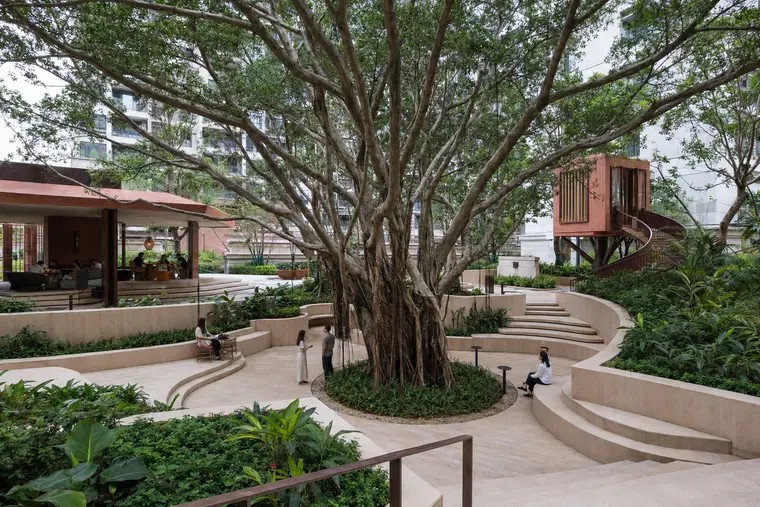
In southern Fujian, red brick is more than a convenient wall material. It is part of the region's visual memory: sun-warmed gables, carved brick patterns, pale stone around openings, deep eaves and courtyards that hold family life. Minnan red brick architecture is recognizable not through one motif, but through this whole family of color, craft and space.
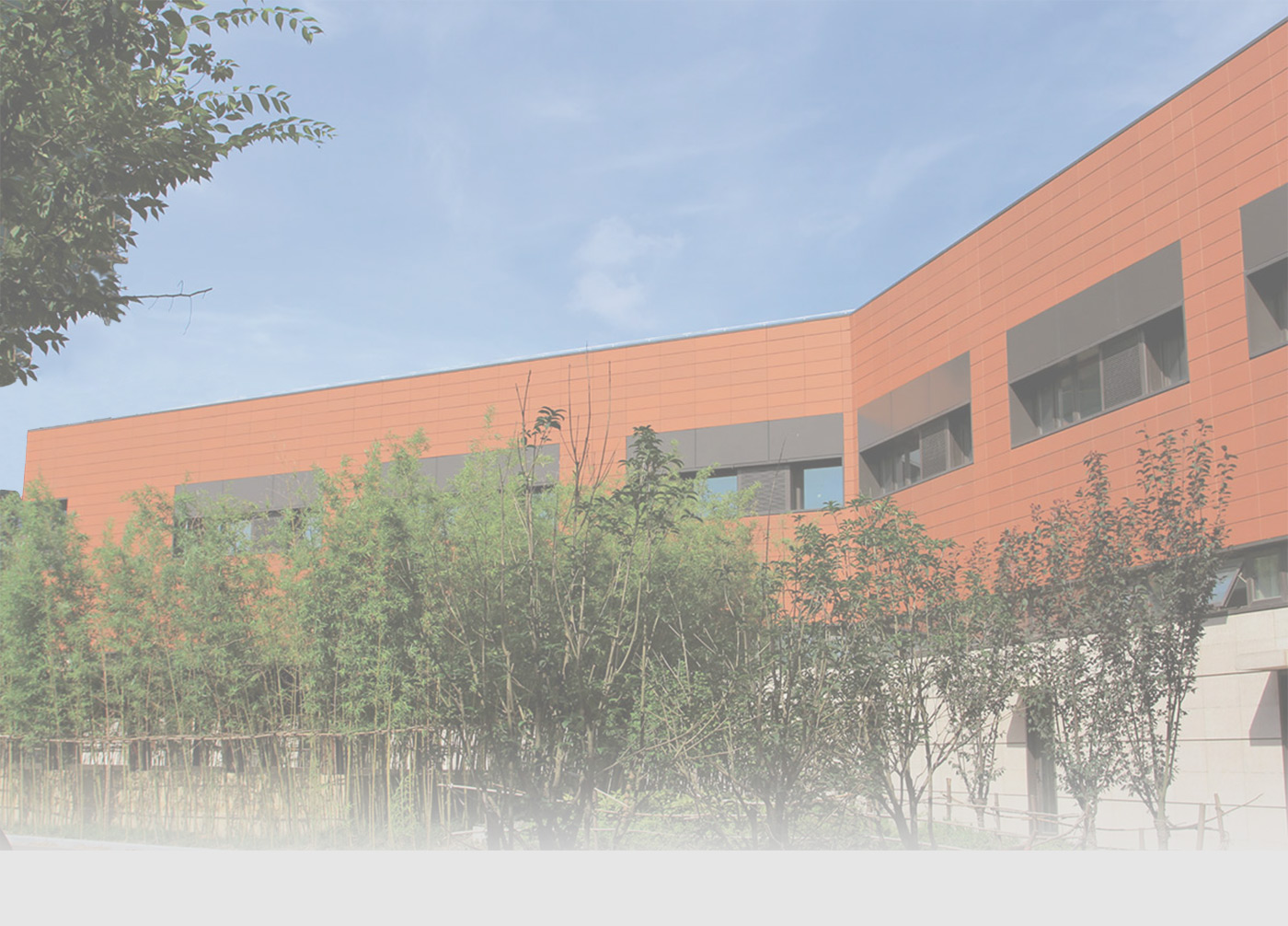
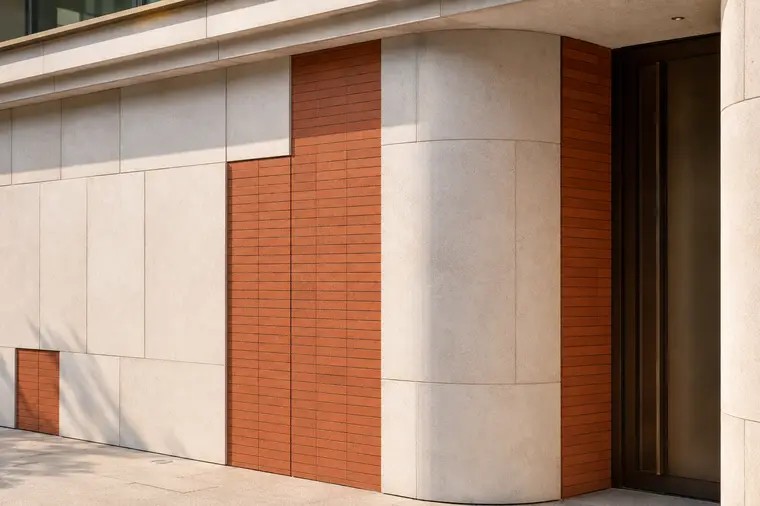
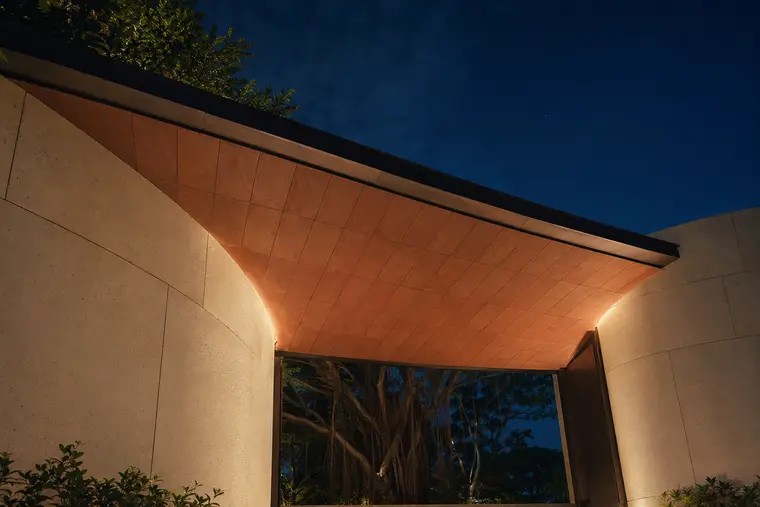
The entrance at Huandong Yunqi borrows from that memory with unusual restraint. A large beige stone portal contains a field of brick-red LOPO terracotta. The red surface continues overhead, drawing people from the street toward an old banyan tree and the sunken garden beyond.
The reference is not a historic shape. It is the familiar sight of red clay held by pale stone.
From brick masonry to a ceramic field
A traditional brick wall is read unit by unit. Mortar joints, bond and hand-cut ornament give it scale. The Huandong Yunqi surface works differently. Slender architectural panels create a continuous ceramic field, and a precise joint grid follows the geometry of the gateway.
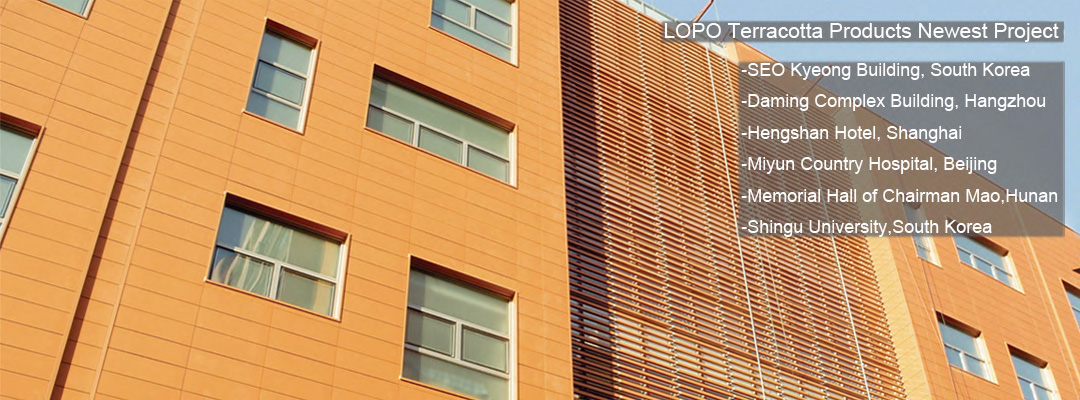
This change is important. Terracotta can preserve the mineral color and tactile quality of fired clay while meeting the dimensional logic of a modern facade. The panels do not pretend to be old bricks. Their length, alignment and supporting system belong to current construction.
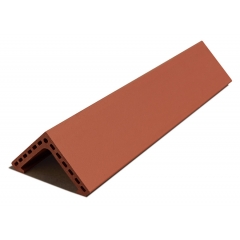
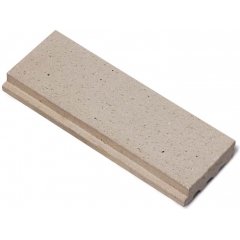
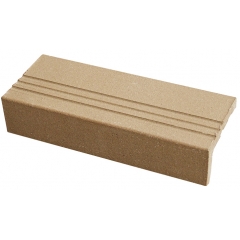
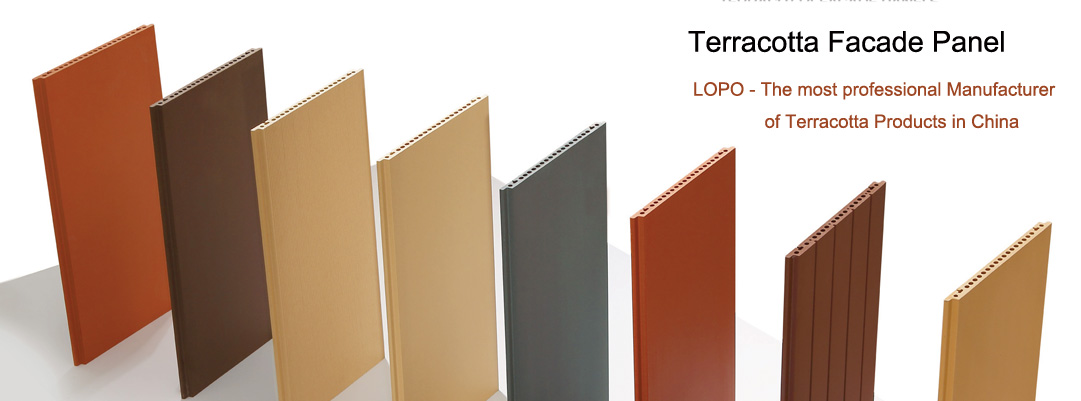
LOPO's terracotta facade cladding can be developed in different formats and profiles, allowing the ceramic rhythm to respond to an opening, curve or soffit rather than relying on a fixed brick module.
Why red and beige feel distinctly Minnan
The local expression sometimes translated as brick set into stone describes a building tradition in which brick and stone are composed together. Pale granite might frame a window, strengthen a base or divide a red wall. Their difference is part of the beauty: one is warm and fine-grained, the other cool and weighty.
An English feature from the Fujian provincial government offers further background on the houses, courtyards and craft associated with this regional tradition.
At Huandong Yunqi, moonlight-beige stone takes the place of the traditional pale masonry frame. Red terracotta is nested inside it. The composition is enlarged and simplified, but the old color relationship remains easy to recognize.
The ceiling is the most memorable wall
The most effective ceramic surface is not on the front elevation. It is above the visitor. Carrying the red panels across the entrance ceiling turns a flat material choice into an experience. The overhead plane compresses the view, introduces shade and makes the opening toward the courtyard feel brighter.
That location also changes the way texture is seen. Grazing light moves across the panel joints, while concealed evening lighting strengthens the red tone. Because people can look up from only a few meters away, the finish needs enough detail to reward a close view without becoming coarse.
Choosing a red that can live with daylight
A facade red should be selected beside its neighboring materials. A vivid sample may become dominant across a large ceiling, while a slightly muted fired tone can remain warm in sun and composed in shade. LOPO's ranges of natural terracotta colors and surface textures and shapes make it possible to compare hue and tactile character separately.
For a project like this, the approval sample should include the proposed stone, metal trim, joint color and lighting. The final decision belongs to the complete palette, not to the ceramic sample alone.
A memory made useful
Huandong Yunqi succeeds because its regional reference is useful. The deep portal gives shelter. The red ceiling clarifies the route. The stone frame withstands visual scale. The courtyard and banyan provide a destination. Cultural meaning grows from those practical choices.
For assistance with fired-color matching, panel profiles or a custom entrance module, contact the LOPO terracotta team.